
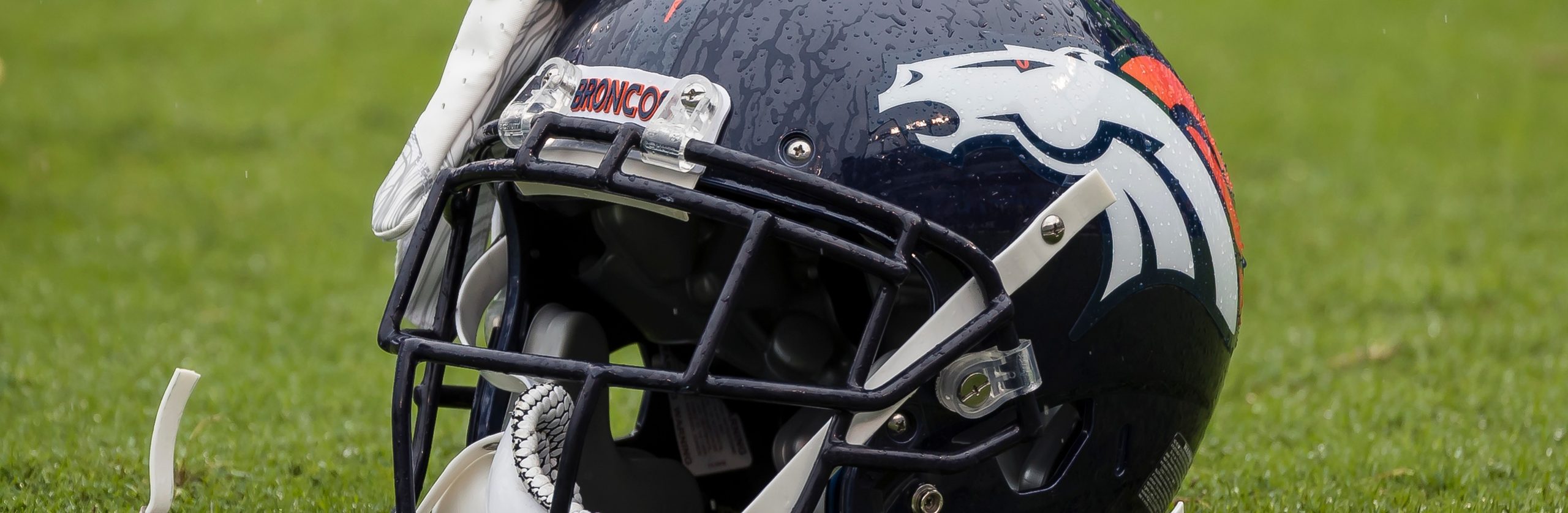
When fans arrive at a professional football game, they see the finished product: the players, the field, the lights, the scoreboard and everything ready for kickoff.
What they don’t see is everything that had to get there.
A professional football team doesn’t just travel with its players. It travels with thousands of pounds of equipment – uniforms, helmets, shoes, medical supplies, training equipment, communication equipment, footballs, coolers, and plenty of backup gear.
In fact, the logistics behind an NFL road game can be massive. The Los Angeles Chargers, for example, have reported traveling with roughly 15,000 pounds of equipment, with that number climbing to around 20,000 pounds in cold weather. It can take up to three hours just to unload and unpack everything when the team arrives!
And that’s just one trip.
Over the course of a season, NFL teams can rack up tens of thousands of travel miles. In 2024, teams were projected to travel a combined 597,408 miles during the regular season. The Los Angeles Chargers led the league at 26,803 miles, more than the circumference of the Earth!
So what happens to all that equipment between games?
Let’s follow it from the team facility to game day, and then back on the road again.
Step 1: It Starts at the Team Facility
Long before the players take the field, the equipment staff is already working.
Getting ready for a road game means gathering, checking, organizing and packing everything the team might need. And “everything” can mean a lot.
For one road trip, equipment may include uniforms and player gear, practice equipment, medical supplies, training tables, communication equipment, coolers and plenty of backups. One study of the Dallas Cowboys found that their equipment was transported in up to SEVEN 53-foot trailers.
And once everything is packed, it needs to be easy to find.
That’s where organization and identification become especially important. When you’re dealing with thousands of pounds of equipment and dozens of containers, knowing exactly what’s inside a case can save valuable time.
Step 2: The Equipment May Leave Before the Team
Something you may not know is, the equipment doesn’t always travel on the same schedule as the players.
For some road games, equipment is loaded onto trucks and sent ahead of the team, sometimes up to 48 hours before kickoff.
That gives equipment staff time to get everything where it needs to go and start preparing the stadium well before the team even arrives.
Apparently, the Carolina Panthers sent approximately 10,000 pounds of equipment on a truck ahead of the team, with another 6,000 pounds traveling on the team’s flight.
That’s a lot of gear to keep track of.
Step 3: Welcome to the Stadium
Once the equipment arrives, the work is far from over.
Everything has to make its way from the loading area to the places where it will actually be used: the locker room, sideline, training areas, medical areas, coaching spaces and more.
When dozens, or potentially hundreds, of pieces of equipment need to be moved, clear identification can make it much easier to know what’s inside, where it belongs and where it needs to go.
The goal isn’t simply getting everything from Point A to Point B. It’s getting the right equipment to the right place at the right time.
Step 4: Game Time
By kickoff, fans aren’t thinking about the logistics that happened behind the scenes, and they shouldn’t have to.
The uniforms are ready. The equipment is where it belongs. The medical and training staff have what they need. The sideline is set up. The footballs are ready.
Fun fact: the Chargers reportedly travel with 27 footballs for a road game, 24 game balls and three kicking balls.
Everything has a job. And everything needs to be ready when that job starts.
Step 5: It All Gets Packed Up Again
The final whistle doesn’t mean the job’s done.
Equipment staff have to collect, check and repack everything that came to the stadium.
What was unpacked now has to be packed again. What traveled hundreds, or thousands, of miles has to be accounted for and sent on to its next destination.
This is another point where organization matters. When equipment is clearly identified, it’s easier to determine what’s been packed, what’s still out and where everything needs to go next.
Step 6: On to the Next Game
And then the cycle starts over.
Pack. Transport. Unload. Organize. Set up. Play. Pack again.
Then do it all over in another city the following week.
In a typical season, that can mean an insane amount of travel. The NFL’s 2024 schedule projected more than 597,000 miles of combined team travel across the league.
For the teams traveling the most, that’s the equivalent of circling the globe. And the equipment is making that journey, too.
Behind Every Game is A LOT of Gear
A football game may last a few hours, but the operation behind it is much bigger.
There are players to prepare, coaches to support, medical teams to equip, technology to manage and thousands of pounds of gear to move from one stadium to the next.
It’s a massive logistical operation that happens largely out of sight. And when everything has a clear place and a clear identity, one small part of that operation becomes a little easier to manage.
Keep Your Equipment Identified
From road cases and equipment containers to cables, gear and more, clear identification can help keep equipment organized wherever it travels.
Comments are closed.